The Whispering Blanket: A Life Shaped by Hokkaido Snow
I didn’t choose Hokkaido snow; it chose me. It happened on a January morning nearly fifteen years ago, stepping off a train at a small station in Niseko. I’d seen snow before, of course—the wet, heavy stuff of coastal cities, the slushy grey piles of urban winters. But this was different. It fell in fat, silent flakes, piling into drifts so deep they swallowed sound itself. The air wasn’t just cold; it was crisp, dry, and scented faintly of frozen cypress. I sank a gloved hand into a fresh bank beside the platform, and it didn’t compact into a snowball. It just… sighed, collapsing into a million tiny, glittering facets. In that moment, I wasn’t just a visitor. I became a student. My life, my work, and my winters have been defined by this singular, phenomenal powder ever since.
 The iconic, bottomless powder of Hokkaido, where skis disappear and the world goes quiet.
The Alchemy of Siberian Winds and the Sea of Japan
To understand Hokkaido snow, you have to start with a map and a meteorology lesson. Hokkaido is the northernmost major island of Japan, and it sits directly in the path of the northwest monsoon winds that sweep down from Siberia in winter. These winds are brutally cold and, crucially, dry. As they cross the relatively warm waters of the Sea of Japan, they act like a giant sponge, sucking up massive amounts of moisture.
This is where the magic happens. That moisture-laden air slams into Hokkaido’s mountain ranges—the Niseko Range, the Daisetsuzan massif, the peaks around Furano. The forced ascent cools the air rapidly, and the moisture condenses and freezes into snow crystals. Because the journey from sea to summit is short, and the base air mass is so cold, the crystals don’t have time to melt and coalesce into large, wet flakes. Instead, they form as tiny, delicate, six-pointed stars—what we call Juhyo (樹氷) or “frost trees” in their rime ice form, but in the air, they remain the legendary Japow (Japan Powder).
The technical term is low-density, low-water-content snow. Skiers and snowboarders call it “cold smoke.” It has a water content often below 8%, compared to 15-20% in much of the Alps or the Rockies. This is the core of its identity: it’s not frozen water so much as frozen air, a lattice so fragile it can’t support its own weight. This creates the famous “face shots” and the sensation of floating, not turning, through the trees.
More Than Just Skiing: The Snow’s Silent Economy
While the global reputation of Hokkaido snow is built on its ski resorts—Niseko United, Rusutsu, Furano—its influence seeps into every crack of winter life here, forming a silent, white economy.
Agriculture’s Insulating Blanket: Drive through the Tokachi plains in February, and you’ll see vast, white fields, smooth and unbroken. That snow, often several meters deep, is a vital insulator for the region’s agricultural heartland. It protects dormant winter crops like winter wheat and the roots of perennial plants from killing frosts. The slow, consistent melt in spring provides crucial groundwater recharge for the famous potato, wheat, and dairy farms. Farmers here don’t just tolerate the snow; they rely on its predictable depth and quality. A “thin” winter is a worry for the coming summer.
The Onsen’s Perfect Partner: There is no experience more quintessentially Hokkaido than sinking into a steaming, mineral-rich onsen (hot spring) as snowflakes melt on your upturned face. The dry, cold air makes the heat of the water more profound, more therapeutic. Towns like Noboribetsu, Jozankei, and Toya are built on this symbiotic relationship. The harshness of the outside world, defined by the snow, makes the interior sanctuary of the bath that much more precious. It’s a lesson in contrast that defines the Hokkaido winter aesthetic.
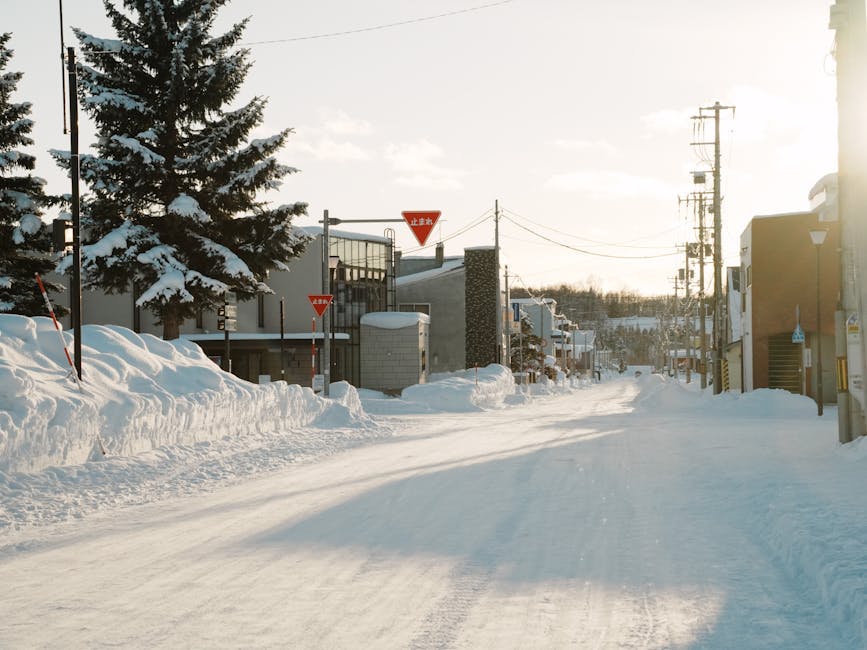
A Crisis Manager’s Nightmare and Playbook: Living with this volume of snow isn’t all poetic floating and hot springs. It’s a relentless logistical operation. Roofs are built with steep pitches. Roads are lined with wooden poles taller than a person to mark the edges when the plows create canyon walls of snow. Every village has its fleet of heavy-duty snowblowers and a shared, unspoken understanding of snow-shoveling etiquette. I learned this the hard way my first winter in a rental cottage. I cleared the driveway but neglected the roof. The weight of a subsequent snowfall, quiet and beautiful, created an ice dam that led to a leaky ceiling. It was a humble, expensive lesson: here, snow management is not seasonal housekeeping; it’s structural defense.
Lessons from the Powder: A Personal Logbook
You don’t master Hokkaido snow; you learn to listen to it. Over countless dawn patrols and storm days, I’ve compiled a mental logbook of hard-won insights.
The Aspect is Everything: Not all snow on the same mountain is created equal. A north-facing slope (kitamuki) will preserve that perfect cold smoke for days after a storm. A south-facing slope (minamimuki) might see the sun transform the top few centimeters into a crust by midday, even in deep cold. My best days have always started on east-facing runs for the early sun, then migrating to north-facing glades as the day wears on. It’s a sun-chasing, shadow-finding dance.
The “Bluebird Day” Trap: Everyone prays for a bluebird day after a storm. But the most experienced locals know the true secret: the hour before the storm breaks. The snow is still falling, light is flat, but the powder is at its absolute prime, untouched and constantly refreshing. I’ve had some of my most memorable runs in near-whiteout conditions, guided more by the feel of the snow underfoot and the silhouette of the trees than by sight. Waiting for perfect visibility often means sharing tracked-out snow with everyone else.
Respect the Tree Wells: The fluffiness that makes the snow so glorious also creates a deadly hazard: tree wells. The deep, unconsolidated snow around the base of evergreen trees can be a pit, sometimes several meters deep. A fall headfirst into one, especially alone, can be like being buried in loose sugar—terrifyingly difficult to escape. I never, ever ski the deep glades alone, and my partners and I keep each other in constant sight. It’s a non-negotiable rule written by too many close calls in the early days.
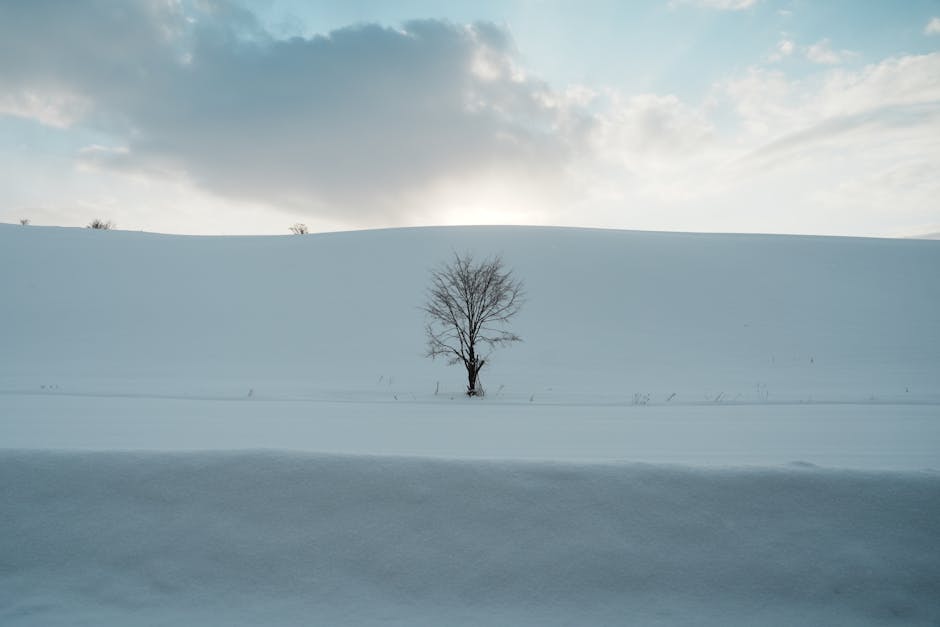
 The delicate process of snow crystal formation, from Sea of Japan moisture to legendary powder.
Not All Powder is Equal: Hokkaido vs. The World
Having skied in the Rockies, the Alps, and the Andes, I can say with confidence that Hokkaido snow is in a category of its own. It’s not better in every way—just profoundly different.
In the interior Rockies of Utah or Colorado, you get fantastic, dry powder, but it’s often interspersed with longer dry spells. The snow has a slightly higher density, making it more forgiving and supportive for high-speed turns. The Alps offer majestic vertical and reliable snowpack, but the snow is often heavier, transformed by warmer Mediterranean air masses. It’s powerful snow, demanding strong technique.
Hokkaido’s snow is the most ethereal. The consistency is like sifted flour. It’s less about aggressive carving and more about fluid, balanced floating. The downside? That same low density means it gets tracked out faster. A line through perfect Hokkaido powder is a one-time gift; by the second run, it’s already changing. In the Alps, a powder run can often be enjoyed multiple times as the snow holds its shape better. It’s the difference between a fragile, exquisite pastry and a hearty, excellent loaf of bread.
The Future: A Warming World and a Changing Snowfall
This is the cloud on the horizon, the one topic that tempers every conversation with old-timers in the lodge. They’ll point to a ridge and say, “See that rock? It used to be covered until May.” The evidence is anecdotal but persistent. Climate models predict that while Hokkaido may see increased precipitation in winter, more of it will fall as rain at lower elevations, especially in the shoulder seasons.
The iconic, reliable deep powder of December through February may become more concentrated, more precious. Resorts are already looking higher up the mountains and investing in snowmaking for base areas—something that was almost laughable a generation ago. The symbiotic relationship with agriculture and water tables could be disrupted by faster, earlier melts and rain-on-snow events.
Yet, Hokkaido’s climate is still fiercely cold. It will likely remain a snow capital for decades to come, even as its patterns shift. The culture here is one of adaptation—to brutal winters, to isolation, to the land’s demands. That resilience will be tested in new ways. For me, it adds a layer of urgency to every perfect run. This isn’t just a recreational commodity; it’s a fragile, breathtaking natural phenomenon that we are witnessing in a specific, golden age.
The Silent Teacher
Hokkaido snow has taught me more than just how to ski powder. It’s taught me to read weather maps with a sailor’s eye, to understand the architecture of a roof, to appreciate the deep quiet that only a thick blanket of snow can bring. It’s humbled me with its dangers and rewarded me with moments of pure, weightless joy that are impossible to describe to someone who hasn’t experienced it.
It’s a seasonal heartbeat for this island. It dictates the rhythm of travel, of work, of social life. It brings the world flocking to its slopes and allows the locals a period of introspective hibernation. It is both the main attraction and the greatest challenge.
So, if you come for the snow, look beyond the ski lifts. Watch how the farmer clears his path, feel the shock of the onsen after a day in the dry cold, and listen to the absolute silence of a snow-laden forest at dusk. That’s when you stop being a tourist and start to understand the true, whispering depth of a Hokkaido winter. It’s a relationship, not a destination. And like all great relationships, it requires respect, attention, and a willingness to be changed by it.
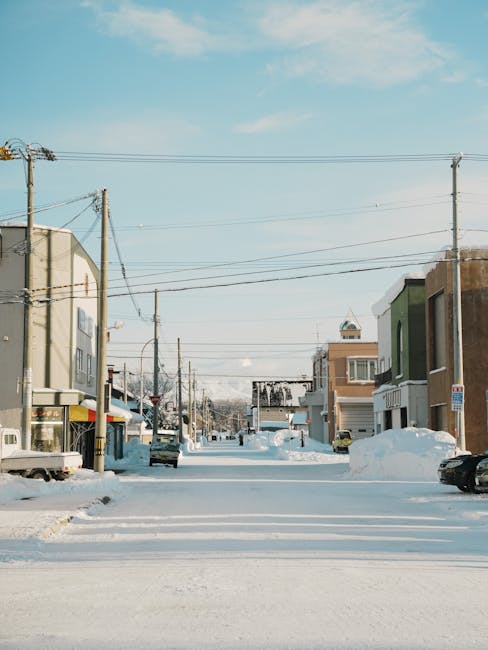
 The daily reality and profound beauty: a snow-laden street in a Hokkaido town, showcasing life within the snow.