The Quiet Heart of Kyoto: Finding More Than Temples in Japan’s Ancient Capital
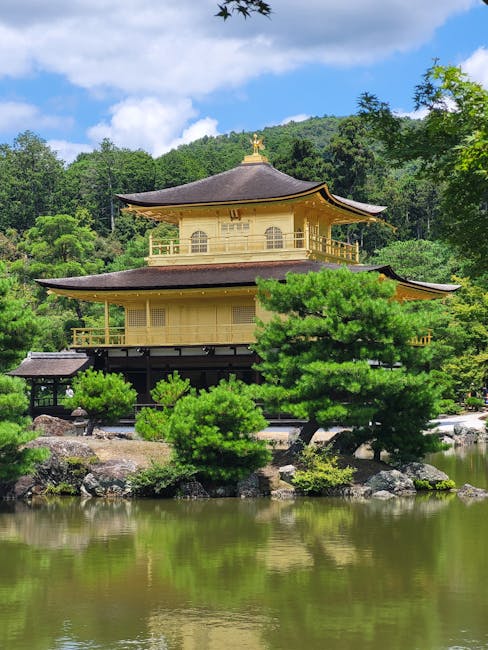
I didn’t come to Kyoto for the temples. Not really. I came for the idea of Japan, for the cherry blossoms I’d seen in films, for the quiet order I imagined. The temples were just items on a checklist, famous names to be ticked off between meals and shopping in Gion. My first visit, over a decade ago, was a blur of rapid-fire tourism: Kinkaku-ji’s gold leaf gleaming under a grey sky, the crush of tourists at Kiyomizu-dera, a hurried walk through the torii gates of Fushimi Inari. I saw them, I photographed them, I left. It was only years later, on a slower, more intentional journey, that I began to understand what I’d missed. Kyoto’s temples aren’t just attractions; they are the city’s living, breathing pulse, classrooms in stillness, and archives of a philosophy etched in wood, moss, and stone.
My moment of understanding came not at a World Heritage site, but at a small, unnamed sub-temple hidden behind a larger, more famous one. Overwhelmed by the crowds at the main hall, I’d slipped down a side path, drawn by the sound of water. There, in a tiny, perfect garden no larger than a studio apartment, I sat for an hour. A single maple tree, its leaves just hinting at autumn crimson, arched over a stone basin. Moss crept over ancient rocks with a velvet softness. The only sounds were water dripping and the distant, muffled city. In that silence, the checklist vanished. I wasn’t a tourist seeing a thing; I was a person experiencing a place. That’s when I realized Kyoto’s temples are a language, and I’d only been reading the headlines. I’ve returned many times since, each visit a deeper study of this language, learning its grammar of space, light, and impermanence.
The Unspoken Grammar: More Than Zen and Zazen
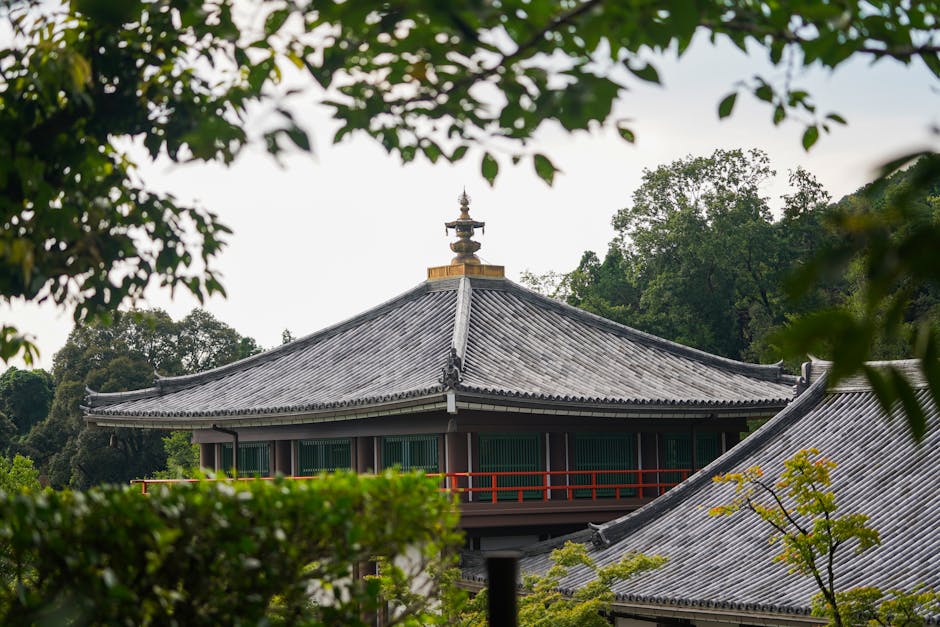
Most historical summaries will tell you Kyoto was Japan’s imperial capital for over a thousand years, a fact that led to a dense concentration of power, wealth, and religious patronage. They’ll mention the arrival of Buddhism from China via Korea, its fusion with native Shinto beliefs, and the rise of distinct sects like Tendai, Shingon, Jodo, and Zen. This is vital context, of course. But on the ground, what this history created is a landscape of profound intentionality. Every temple complex is a three-dimensional sermon.
Take the concept of wabi-sabi, the beauty of imperfection and transience. You don’t just learn about it; you feel it in the weathered, grey timber of a 400-year-old veranda, in the asymmetrical placement of rocks in a kare-sansui (dry landscape) garden, like the famous one at Ryoan-ji. That garden isn’t a puzzle to be solved, despite what every guidebook says about the 15 rocks and hidden tigers. Sitting before it, you’re meant to confront your own mind’s chatter. The raked gravel isn’t just sand; it’s a constantly changing canvas of waves or clouds, reminding you that stillness is an activity, and perfection is a fleeting moment before the wind or a monk’s rake alters it forever.
Then there’s mitate—the art of borrowed scenery. This is where Kyoto’s temple architecture becomes genius. At places like Shisen-do or the lesser-known Entsu-ji, the garden isn’t an end in itself. It’s a foreground frame for the distant Higashiyama mountains. The temple doesn’t own that view, but it borrows it, making the entire natural world part of its sacred space. The building is designed not to dominate, but to disappear, to become a perfectly composed window. This technical, architectural decision is rooted in a spiritual one: the human-made is temporary and small; nature is eternal and vast. We are guests here.
The Real-World Application: Temples as Operating Systems for Modern Life
This is where it moves from art history to practical application. You don’t need to be Buddhist to benefit from the principles encoded in these places. I’ve come to see them as remarkably sophisticated “operating systems” for attention and perspective, desperately needed in our fragmented digital age.
The Practice of Approach: The journey to a temple is often as important as the destination. The long, sloping path up to Kiyomizu-dera, lined with shops, is a gradual transition from the profane to the sacred. The climb through thousands of torii gates at Fushimi Inari is a physical exertion that creates a sense of arrival. In our world of instant access, the temple teaches the value of threshold, of a mental ramp-down. I now apply this digitally. Before starting deep work, I take a five-minute “approach” walk, leaving my phone behind. It creates a boundary my mind recognizes.
The Lesson of the Tokonoma: In temple guest halls and teahouses, the tokonoma (alcove) holds a single scroll and a simple flower arrangement. This focal point is changed with the season, sometimes daily. It’s a masterclass in curation and attention. In a world of infinite scrolling and visual noise, the tokonoma asks: what is the one thing worth looking at right now? I’ve tried to bring this into my home office. One piece of art. One vase. A radical reduction of visual stimuli that, paradoxically, makes the space feel larger and my mind calmer.
The Impermanence of the Garden: The temple garden is never “finished.” It is in a state of beautiful decay and constant tending. Moss is watered by hand. Leaves are swept. This acknowledges that maintenance isn’t a chore separate from beauty; it is the beauty. It’s a powerful antidote to the “set-and-forget” mentality of modern life. My most peaceful moments in Kyoto have been watching a niwashi (gardener) patiently trimming moss edges with tiny scissors. It’s a lesson in caring for what you have, inch by inch, day by day.
Advantages, Disadvantages, and the Crowd Conundrum
The advantage of Kyoto’s temples is their immersive pedagogy. You learn by being there, by feeling the cool tatami under your socks, smelling the incense (osenko), hearing the hollow knock of a shishiodoshi (deer-scarer) in a pond garden. It’s a full-sensorium education in aesthetics and philosophy.
The disadvantage, glaringly obvious to any visitor, is their overwhelming popularity. The very serenity they are designed to foster is often shattered by tour groups, selfie sticks, and a constant murmur of languages. I’ve made the classic mistake of trying to “do” the big-name temples at midday. It’s a recipe for frustration. You’re herded, you can’t see, you can’t hear, and you leave feeling you’ve consumed a product, not experienced a place.
This is where strategy and local knowledge become critical. The best practice I’ve learned is to abandon the checklist. Choose depth over breadth. Pick one or two temples for a day, not five.
- Temporal Strategy: Go at opening time (often 8 or 9 AM) or in the last 90 minutes before closing. The light is better, the crowds are thinner. Some temples, like Kodai-ji, have special night illuminations (light-up) in autumn and spring, which offer a completely different, often magical, perspective.
- Spatial Strategy: For every Kinkaku-ji, there is a subtler, quieter cousin. Instead of the packed Ryoan-ji, try the equally profound and often empty Daitoku-ji complex, a warren of sub-temples, many with reservations-only gardens. Instead of the main Sanjusangen-do hall (though its 1001 statues are unmissable), explore the peaceful grounds of its neighbor, Myoho-in.
- The “One Hour Sit” Rule: This is my personal non-negotiable. At one temple per visit, I find a spot—a bench, a veranda—and I simply sit for one hour, without my phone. I watch the light change. I watch the few other visitors come and go. I listen. This is when the temple reveals itself. The architecture settles, the garden breathes, and the intended atmosphere seeps in.
A Personal Case Study: Nanzen-ji and the Lesson of the Aqueduct
Let me give you a concrete example from my last trip, focusing on Nanzen-ji. This massive Zen temple complex at the base of the Higashiyama mountains is famous for its soaring San-mon gate and its elegant Hojo garden. Most visitors see these, snap photos, and leave. I did that the first time.
On my return, I wandered past the main buildings and stumbled upon something astonishing: a huge, red-brick Meiji-era aqueduct cutting right through the temple grounds 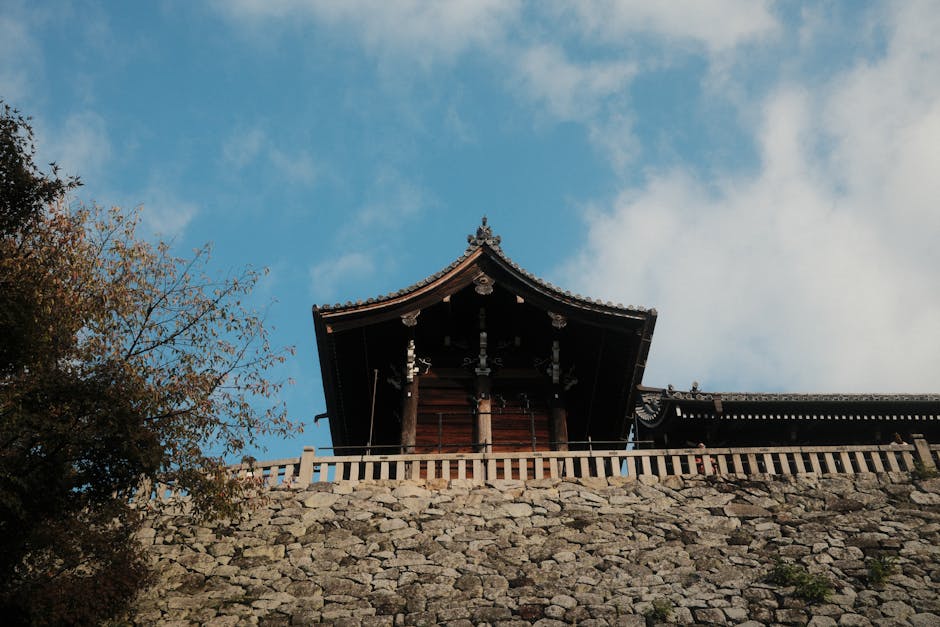 . It was a shock—a piece of 19th-century Western industrial infrastructure slicing through this bastion of medieval Zen aesthetics. My first reaction was dismay. It felt like a violation.
I sat with that dissonance on a stone step for a long while. And then it clicked. This wasn’t a mistake; it was a masterstroke. The aqueduct, with its rigid Roman arches, didn’t ruin the temple’s peace. It framed it. It was a brutal, undeniable statement of time’s passage—the Meiji Restoration’s rush to modernize, literally built over the old Kyoto. The temple didn’t fight it; it incorporated it. The lush moss and maple trees now grow right up to its bricks. The Zen garden exists in the shadow of this monument to a different kind of human ambition.
Nanzen-ji, in that moment, taught me more about wabi-sabi and acceptance than any perfectly preserved site could. It showed that true serenity isn’t about freezing time in a perfect past, but about finding peace amidst the layers of history, even the jarring ones. It’s a lesson in resilience I think about often.
The Future: Preservation vs. Pulse
The future of Kyoto’s temples is fraught with beautiful tension. They are caught between being preserved as museum pieces and remaining living, breathing centers of community and faith. The tourist onslaught is both a financial lifeline and an existential threat. I’ve seen temples implement timed tickets, higher fees for foreigners, and strict no-photography zones in certain halls—all necessary, if uncomfortable, steps.
The most hopeful trend I see is the rise of experiential, non-invasive tourism. More temples are offering early morning zazen (seated meditation) sessions, calligraphy classes, or shojin ryori (Buddhist vegetarian cuisine) meals by reservation. These activities attract visitors who want engagement, not just a photo op, and they provide income that supports preservation. It’s a move from passive viewing to active, respectful participation.
Furthermore, the city and temple authorities are getting smarter about dispersing crowds. Promoting lesser-known areas like Ohara or Takao, or highlighting seasonal events beyond the cherry blossom and maple crazes, helps take pressure off the central icons.
Ultimately, the future health of these places depends on us, the visitors. It depends on our willingness to slow down, to follow the rules (silence your phone, don’t step on the moss, no flash photography), and to understand that we are entering a home, not a theme park. We must become students, not consumers.
Kyoto’s temples have taught me to see differently. They’ve taught me that space can be a teacher, that emptiness is full of meaning, and that the most profound beauty often requires you to sit still long enough for your own internal noise to settle. They are not relics. They are, if you let them be, mirrors. They show you not just the ideals of a culture, but the state of your own attention. My advice is simple: go to Kyoto. Skip half the temples on your list. Find one that speaks to you, and listen. Sit on its veranda until the tour groups have come and gone. Watch the moss. Listen to the water. Let the borrowed scenery of the mountains fill you. You won’t just see a temple. You might, for a moment, understand its quiet, enduring heart.