Finding Stillness in the Heart of Tokyo: My Years at Meiji Jingu
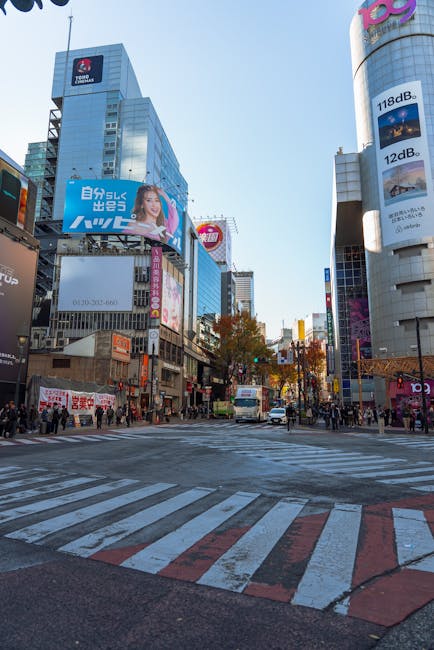
It’s a paradox I’ve never quite gotten used to. You emerge from Harajuku Station, a place where the air itself seems to vibrate with the frenetic energy of teenage fashion, blaring pop music, and the sugary scent of crepes. You cross the street, pass under the first towering wooden torii gate, and within twenty paces, the world changes. The noise doesn’t just fade; it’s swallowed whole by a forest. The light turns a deep, dappled green. The air cools and carries the scent of damp earth and ancient cedar. This is my entry point, time and again, into Meiji Jingu. It’s not just a shrine I visit; it’s a place I’ve returned to for over a decade, a touchstone in my life in Japan that has taught me more about this country’s soul than any book ever could.
My first visit was as a wide-eyed tourist, ticking off a major landmark. But what kept me coming back, season after season, was the palpable sense of intentionality here. Meiji Jingu isn’t an ancient relic that happened to survive the city’s growth; it’s a deliberate, living creation. It’s a 175-acre argument for serenity, built in the heart of a metropolis as a testament to what Japan chose to venerate at a pivotal moment in its history. To understand this place is to understand a key layer of modern Japan itself.
The Forest as a Foundation: More Than Just Trees
Most people come for the shrine buildings, and they are magnificent. But to gloss over the forest is to miss the entire point. This isn’t a natural woodland. When the shrine was conceived in 1915 to deify the spirits of Emperor Meiji and his consort, Empress Shoken, the site was a barren plot. The visionaries behind it, led by the forester Dr. Honda Seiroku, embarked on what can only be called a 100-year project.
They sourced over 100,000 trees from all over Japan and even from Japanese expatriates worldwide, planting them in a carefully engineered, multi-layered ecosystem designed to evolve into a permanent, “everlasting forest.” They thought in centuries, not decades. Walking the gravel paths today, you’re walking through a living memorial grown from donated saplings. The towering camphor trees near the main complex, the dense stands of Japanese cypress, the mossy floor—it all feels primordial, yet it’s younger than New York’s Central Park. This taught me my first major lesson about Japan: the profound artistry in creating something that feels destined, not built. The forest is the first and most important “ritual space,” preparing you, step by step, for what lies ahead.

The Mechanics of Reverence: How the Shrine “Works”
The technical genius of Meiji Jingu lies in its choreography of human experience. It’s a masterclass in environmental psychology. The journey is the process.
The Purification (Temizu): Before approaching the main hall, you stop at the temizuya, the water pavilion. The ritual is simple: take the ladle in your right hand, wash your left. Switch hands, wash your right. Cup your left hand, pour water into it, and rinse your mouth (spitting the water discreetly onto the gravel, not back into the basin). Finally, tilt the ladle vertically to cleanse the handle. It’s not about hygiene in a modern sense; it’s a symbolic cleansing of the mind and senses. I’ve watched countless people fumble through this their first time (I certainly did), but there’s a gentle, unspoken learning that happens by observing others. It’s an active, physical participation that marks the transition from spectator to participant.
The Offering and Prayer (Saisen and Norito): At the main offering hall, you toss a coin—usually a five-yen coin (go-en) for its pun on “good缘分” (good connection)—into the grate. You bow twice deeply, clap your hands twice sharply (to summon the deities and announce your presence), hold your hands together in prayer for a moment of silence, then bow once more deeply. This structure provides a framework for your personal thoughts. You’re not just “thinking hard”; you’re performing a sequence that guides your focus. The clap, in particular, is a brilliant sonic punctuation in the quiet space.
The Omikuji and Ema: After praying, many people draw a fortune (omikuji). If it’s bad luck, you tie it to a designated rack, leaving the misfortune behind at the shrine. If it’s good, you take it home. The ema—small wooden plaques on which you write a wish—create a powerful, collective tapestry of hopes. Seeing them flutter in masses, written in dozens of languages, is a humbling reminder of our shared human desires: health for a parent, success in exams, a happy marriage.
The shrine “works” by providing these tangible, repeatable actions that externalize internal states. It gives anxiety a place to go (onto an ema), confusion a structure to follow (the prayer sequence), and hope a physical token (the omikuji).
A Living Calendar: The Shrine in Real-World Scenarios
Meiji Jingu is not a museum. Its calendar dictates some of the most vibrant events in Tokyo, showing its deep integration into contemporary life.
- Hatsumode: My most memorable experience was participating in Hatsumode, the first shrine visit of the New Year. For three days, the shrine welcomes over three million people. I joined the crowds just before midnight on December 31st. The atmosphere was electric, but not with partying; it was a collective, patient anticipation. We moved in a slow, steady river of humanity through the forest, police gently guiding the flow. When I finally reached the main courtyard in the early hours of New Year’s Day, threw my coin, and clapped in unison with thousands of others, the sound was a thunderous, rolling wave. It was chaos, yet profoundly orderly and purposeful. It was Japan’s social contract in action: personal reverence within immense collective participation.
- Weddings (Shinzen kekkon): It’s common to see traditional Shinto wedding processions at the shrine. The sight of the bride in a pure white shiromuku kimono and elaborate headdress (tsunokakushi), the groom in formal montsuki, followed by family in meticulous attire, is like watching a living ukiyo-e print. It underscores the shrine’s role as an active witness to life’s milestones.
- Seasonal Festivals (Matsuri): From the solemn Niinamesai (Harvest Festival) to the lively Spring Grand Festival, the shrine grounds become a stage for ancient rituals, kagura music, and dance. These aren’t performances for tourists; they are obligations to the deities, and the public is invited to observe. You can feel the weight of continuity.

The Double-Edged Sword: Advantages and Inevitable Tensions
The advantage of Meiji Jingu is its unparalleled accessibility to a profound cultural and spiritual experience. Where else in the world can you go from a hyper-commercial fashion district to a sacred forest and active place of worship in a two-minute walk? It’s a masterful pressure valve for the city. It’s also remarkably welcoming. There’s no entrance fee, no proselytizing. You can participate as much or as little as you like. The sheer beauty and scale command a quiet respect.
The disadvantages, or perhaps challenges, are intertwined with its popularity and symbolism.
- The Crowds: Outside of major festivals, you can find solitude on the forest paths. But the main shrine area is almost always busy. The quiet contemplation you might seek can be elusive when surrounded by tour groups and the constant rustle of movement. It requires effort to find your own moment.
- Historical Weight: Emperor Meiji’s reign (1868-1912) saw Japan’s rapid modernization and imperial expansion. For some, especially visitors from nations affected by that expansion, the shrine can be a complex, even contentious symbol. The adjacent Yoyogi Park and the Meiji Memorial Picture Gallery offer different facets of this history. The shrine itself focuses solely on the deified spirits, not political history, but the context is inescapable.
- The Risk of the “Checklist” Visit: The biggest pitfall for visitors is treating Meiji Jingu as a mere photo op between Takeshita Street and Shibuya Crossing. If you rush through, you experience only the architecture, not the atmosphere.
Lessons Learned and Mistakes to Avoid
Through countless visits, I’ve developed my own practices and seen common missteps.
- My Personal Ritual: I rarely go straight to the main hall. I’ll take the southern forest path that leads past the Iris Garden (a stunning, less-visited spot in June that was beloved by Empress Shoken). I spend time at the quieter Kiyomasa’s Well, a spot known for its clear water and spiritual energy, before looping around. This reverses the crowd flow and builds a slower pace.
- Mistake #1: Ignoring the Forest. Don’t just barrel down the main avenue. Take a side path. Sit on a bench. Listen. The forest is the shrine’s greatest feature.
- Mistake #2: Misunderstanding the Torii Gate. The massive torii are not entrances to a building, but markers separating the mundane world (kegare) from the sacred, purified space (hare). Passing under them is the first act of the visit. Acknowledge it with a slight bow if you wish.
- Mistake #3: Focusing Only on the “Front.” The Meiji Jingu Museum (designed by architect Kuma Kengo) is a stunning modern addition that houses personal artifacts of the Emperor and Empress, offering intimate, humanizing glimpses. The Inner Garden (requires a small fee) is a world apart, a strolling garden of breathtaking beauty. Skipping these is a shame.
- Best Practice: Go Early or Go Late. An hour after opening or an hour before closing (the forest paths close at sunset, the main precinct later) offers the most atmospheric experience. Visit on a weekday if possible. And for heaven’s sake, wear comfortable shoes. The gravel paths are unforgiving on fashion footwear.
Not the Only Path: How It Compares
Tokyo has other great shrines, and they serve different purposes. Senso-ji in Asakusa is a bustling, vibrant Buddhist temple with a long, market-lined approach—it’s about community and commerce intertwined with faith. Yasukuni Shrine is overwhelmingly political and historical, its visit fraught with different meanings. Nezu Shrine in Bunkyo is smaller, older, and feels more like a hidden neighborhood gem.
Meiji Jingu’s alternative is its own northern section, the Meiji Jingu Gyoen or Inner Garden. If the main shrine is the public ceremony, the Inner Garden is the private, poetic letter. It’s where I go when I need deeper quiet. It’s also home to the stunning irises and a tranquil pond. For a more intimate, garden-focused Shinto experience, this is the place.
The Future Rooted in the Past
Meiji Jingu’s future was, in a way, already tested. The original buildings were destroyed in WWII air raids. What stands today is a faithful 1958 reconstruction. This fact is crucial: it proves the shrine is an idea, a community, and a forest first, and a set of buildings second. Its future is secure because it has already been reborn.
The challenges will be managing its global popularity while preserving its sanctity, and continuing to navigate its historical place in a changing Japan. The recent addition of the sleek, wooden-latticed museum shows an ability to evolve architecturally while respecting tradition. I see it increasingly becoming a global center for explaining Shinto to the world, not just a tourist destination.
A Personal Touchstone
On my last visit, during a period of personal uncertainty, I did the full ritual slowly. At the temizuya, the cold water was a shock that cleared my head. Writing an ema, I focused not on a desired outcome, but on the clarity to handle whatever came. As I tied it among thousands of others, I felt a silly but real comfort—my worry was now physically there, not just in my head. I walked back through the forest as the late afternoon sun cast long shadows, the city’s murmur slowly returning.
Meiji Jingu doesn’t offer answers. It offers a process. In a world of constant noise and digital immediacy, it provides a physical, slow, sensory path to a moment of pause. It’s a reminder that some things—forests, traditions, a moment of collective silence—must be cultivated with patience and visited with respect. It’s the green, beating heart of Tokyo, and for me, it remains one of the most skillfully designed and deeply human places on earth.