Finding Stillness in the Chaos: My Years Wandering Shinjuku Gyoen
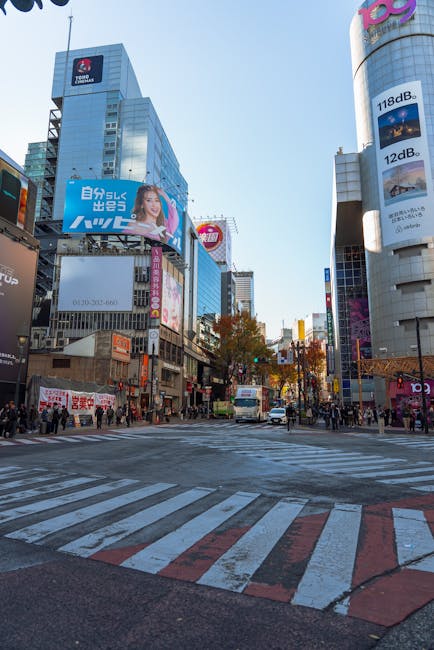
I first stumbled into Shinjuku Gyoen National Garden out of sheer, desperate necessity. It was my third week living in Tokyo, a city that had swiftly shifted from exhilarating to utterly overwhelming. The relentless hum of Shinjuku Station, the vertical crush of skyscrapers, the neon pulse of Kabukicho—it was a symphony of stimuli that left my nerves frayed. A colleague, noticing my shell-shocked expression, scribbled “新宿御苑” on a post-it note. “Go,” she said. “Breathe.”
I expected a park. What I found, and what has kept me returning for over a decade, is a masterclass in landscape design, a living history book, and perhaps the most effective balm for urban anxiety ever conceived. This isn’t just a green space; it’s a 144-acre argument for the necessity of contrast, a serene counterpoint written in moss, maple, and meticulously raked gravel to the frenetic metropolis that surrounds it.

From Feudal Estate to Imperial Garden to Public Sanctuary
To understand Shinjuku Gyoen is to understand its layers, each era leaving a distinct imprint on the soil. Its story begins in the Edo period, when the land was part of a daimyo (feudal lord) estate. The Naitō family, who held it, would likely be astonished to see it today. The garden’s true transformation began in the Meiji era, when it was converted into an imperial botanical garden—a place for agricultural experimentation and a symbol of Japan’s rapid modernization and engagement with the wider world.
This imperial past explains its scale and ambition. This was never meant to be a simple neighborhood park. After surviving the devastating fires of World War II, it was painstakingly rebuilt and re-opened to the public in 1949 as a national garden. That transition, from exclusive imperial grounds to a people’s park, feels profoundly significant. It’s as if the nation decided that in its recovery and future prosperity, such a place of profound beauty and peace was not a luxury for the few, but a vital necessity for all.
The “How”: A Triptych of Garden Philosophies
What makes Shinjuku Gyoen so uniquely captivating is its structural genius: it seamlessly blends three distinct garden styles into one cohesive whole. It’s less a single garden and more a curated tour of horticultural philosophy.
First, there’s the Formal Garden. Centered on the stately, European-style greenhouse and radiating out with geometric flower beds, sweeping lawns, and symmetrical lines of tulips or cosmos, this section speaks the language of order and control. It’s a beautiful, open space, perfect for picnics and sunbathing, and it feels like a deliberate nod to the Western influences embraced during the Meiji period.
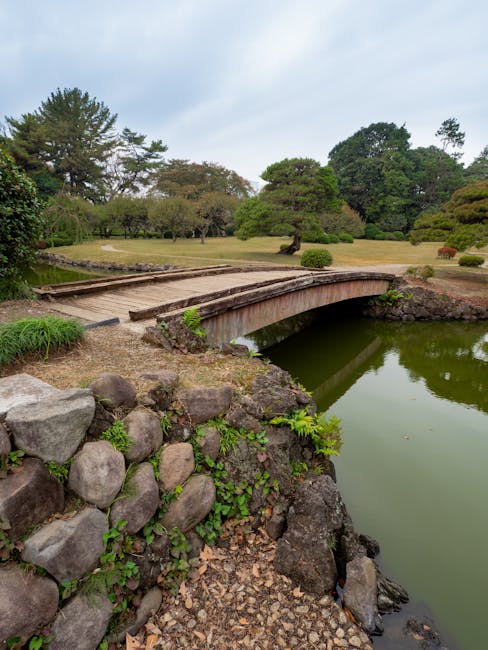
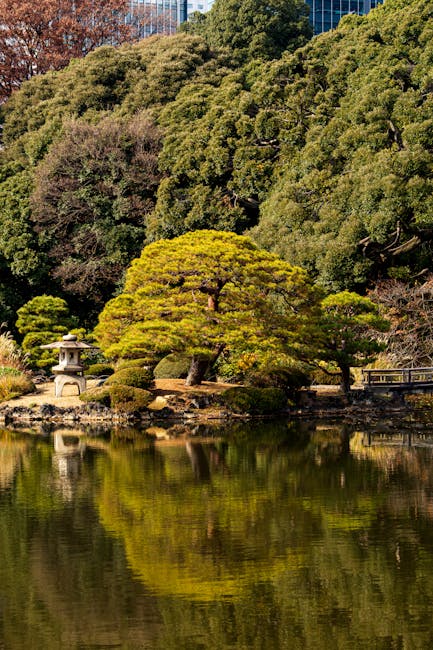
Then, you slip into the Japanese Traditional Garden. This is the heart of the Gyoen for many purists. Here, every curve of the pond, every placement of a stone lantern or carefully pruned pine, obeys the principles of shakkei (borrowed scenery) and wabi-sabi (the beauty of imperfection). The winding paths, the wooden bridges arching over koi-filled ponds, the tea houses nestled in quiet corners—this section demands a slower pace, a more contemplative eye. It’s here that you learn to appreciate the artistry of emptiness, the space between the branches.
Finally, there’s the Landscape Garden. This feels the most “natural,” with its broad lawns, gently rolling hills, and curated groves of trees. It’s a more pastoral, English-inspired ideal of nature. This is where the famous cherry blossoms (sakura) and autumn maples (momiji) hold court, their seasonal performances drawing thousands. The genius is in the transitions; you never feel a jarring shift from one style to another. The designers used elevation changes, tree lines, and subtle pathways to guide you gently from one world into the next.
The Real-World Application: More Than Just a Pretty Place
The practical application of Shinjuku Gyoen is deceptively simple: it recalibrates the human spirit. But if you look closer, you see it functioning in a dozen vital ways.
It’s a social equalizer. On any given day, you’ll see salarymen in full suits eating a bento alone under a tree, groups of elderly friends painting watercolors, Filipino caregivers enjoying a day off with their charges, fashion students sketching, and tourists from every corner of the globe wandering in awe. The shared admission fee (a mere 500 yen) grants access to a common ground of rare quality, temporarily flattening Tokyo’s steep social and economic hierarchies.
It’s a living classroom. I’ve learned more about Japanese aesthetics, seasonality (kisetsukan), and plant life from lazy afternoons here than from any guidebook. You see how moss is cultivated as a velvet carpet, how pine branches are supported with almost invisible ropes to create perfect silhouettes against the winter sky, and how each season is ushered in with a specific floral fanfare.
Most personally, it’s my psychological reset button. I’ve developed a ritual for when the city feels like it’s closing in. I enter the Gyoen, walk directly to the quietest corner of the Japanese garden, and simply sit for twenty minutes. I watch the koi, follow the path of a leaf drifting on the pond, and listen to the wind in the bamboo. The effect is near-medicinal. The constant, low-grade stress of city life drains away, replaced by a manageable, quiet focus. It’s a lesson in the power of designed environment on mental health.
Advantages, Disadvantages, and the Cherry Blossom Conundrum
The advantages of Shinjuku Gyoen are obvious: immense beauty, historical significance, incredible diversity within a single location, and its central, accessible location. It’s a one-stop shop for experiencing the pinnacle of Japanese gardening styles.
But it has its constraints, which are really just facets of its popularity and purpose. The biggest “disadvantage” is peak season, specifically hanami (cherry blossom viewing) in early April and koyo (autumn leaves) in November. The garden becomes a different beast entirely. The serene pathways transform into rivers of people. The quiet contemplation is replaced by a festive, sometimes raucous, party atmosphere. It’s wonderful in its own way—a vibrant celebration of fleeting beauty—but it is not the tranquil escape it is for most of the year. My advice? Experience it once for the spectacle, but know that the Gyoen’s deeper magic is found in the off-seasons: the lush, quiet humidity of a summer morning after rain, or the stark, elegant beauty of a winter weekday.
Another point of comparison is with other famous Tokyo gardens. Koishikawa Korakuen is a more concentrated, classical Japanese garden, with a denser historical narrative. Rikugien is a masterpiece of the kaiyu-shiki (stroll garden) style, arguably more “perfect” in its traditional form than the Gyoen’s Japanese section. But neither offers the breathtaking scope, the variety, or the sheer spaciousness of Shinjuku Gyoen. The Gyoen’s advantage is its comprehensiveness. It’s the sprawling novel to their exquisite short stories.
Lessons Learned and Pitfalls to Sidestep
Through countless visits in every season and weather condition, I’ve compiled a short list of hard-earned wisdom for making the most of the Gyoen:
- The Entrance Matters. Most people flock to the Shinjuku Gate. For a more peaceful start, use the Sendagaya or Okido Gates. You’ll often find yourself in a quiet section of the garden while the crowds are still clustering near the main entrance.
- Seasons Dictate Everything. Don’t just come for the cherries. The plum blossoms in February are a secret delight—fragrant, colorful, and blissfully uncrowded. The greenhouse is a savior in winter or the rainy season, a humid, vibrant jungle escape.
- Pacing is Key. The biggest mistake is trying to “see it all” in a rushed hour. The garden is designed for meandering. Give yourself at least three hours. Sit down. Don’t just walk from photo-op to photo-op.
- Respect the Rules. This isn’t a wild park. There are no ball games, no frisbees, no music speakers. Areas for sitting on the grass are clearly marked. This strictness is what preserves the peace and the beauty. Adhering to it is part of the experience.
- The Best Time is Weekday Mornings. This is the golden rule. A Tuesday at 10 AM is a fundamentally different experience from a sunny Sunday afternoon.
A personal anecdote: I once made the mistake of trying to guide a jet-lagged friend through the entire garden in 90 minutes before a dinner reservation. It was a disaster. We saw everything and felt nothing. We were just two more bodies on the path, ticking boxes. The next time she visited, we did it differently. We entered at Sendagaya, bought tea from a vendor, and spent two hours just in the Japanese garden, ending at the Taiwan Pavilion. We talked, we pointed out turtles sunning themselves, we didn’t look at a map. It was one of the most memorable days of her trip. The lesson was clear: in Shinjuku Gyoen, depth always trumps breadth.
The Future: Preservation in a Changing Climate and City
Looking ahead, the challenges facing Shinjuku Gyoen are subtle but significant. Climate change is altering the delicate calendar of its flora. The cherry blossom dates have become less predictable, and intense summer heatwaves stress the ancient trees. The garden’s caretakers are undoubtedly engaged in a silent, ongoing battle of adaptation and preservation.
Furthermore, as Tokyo prepares for ever more tourists and densifies around the garden’s walls, the pressure on this green oasis will only increase. Its role as a critical urban “lung” and heat sink becomes more vital with every new skyscraper. The future of Shinjuku Gyoen isn’t about adding new features; it’s about protecting its core mission of providing contrasting serenity through meticulous, sustainable stewardship. It will need continued public support and respect to maintain its fragile equilibrium.
A Personal Refuge, A National Treasure
Shinjuku Gyoen National Garden is more than a tourist attraction listed in a guidebook. For me, it has been a constant in a city of relentless change, a teacher of patience and observation, and an indispensable tool for living well in a megacity. It proves that true luxury isn’t opulence, but space, silence, and the time to notice a single crimson maple leaf floating on a still pond.
The next time you find yourself in Tokyo, vibrating from the sensory overload, do what I did all those years ago. Pay the small fee, step through the gate, and let the city’s roar fade into a whisper. Walk from the orderly symmetry of the Formal Garden, through the poetic narrative of the Japanese landscape, and out into the open embrace of the Landscape Garden. Have a picnic. Read a book. Do nothing at all. You’ll leave not just having seen a beautiful garden, but feeling realigned, recentered, and reminded that even in the world’s most bustling urban heart, profound stillness is waiting, patiently, just behind the wall.