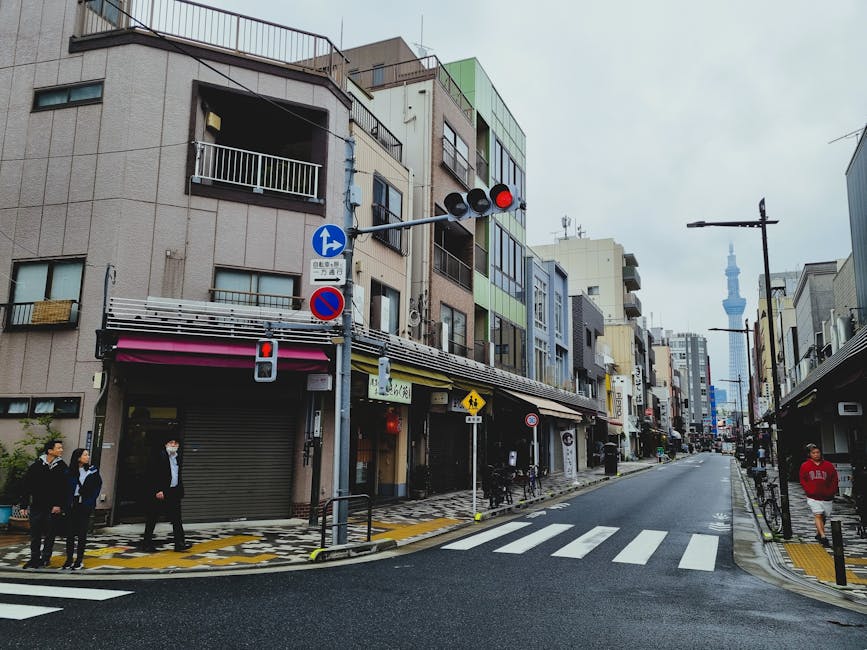
Tokyo Skytree: More Than a Tower, It’s the City’s Beating Heart
I remember the first time I saw it. It wasn’t from a guidebook or a postcard, but from the window of a late-night train rattling through the northern suburbs. There, piercing the inky Tokyo sky, was a slender needle of light, shifting through a slow, mesmerizing palette of indigo and violet. It felt less like a building and more like a signal, a beacon from some other, more elegant world. That was my introduction to Tokyo Skytree, and it sparked a fascination that’s had me returning dozens of times since, in every season and mood. For most visitors, it’s a checklist item: the world’s tallest tower, a great view. But spend enough time with it, talk to the people who built it and run it, and you start to see it for what it truly is: a deeply thoughtful, almost philosophical response to what a modern city needs to be.
From Needle to Pillar: The Historical Context of a Modern Landmark
To understand Skytree, you have to understand what came before. For decades, Tokyo’s broadcast heart was the Tokyo Tower, that iconic orange-and-white latticework inspired by the Eiffel Tower. I’ve always had a soft spot for it; it’s a charming relic of Japan’s optimistic post-war boom. But by the early 2000s, it had a problem. Tokyo’s forest of skyscrapers had grown up around it, creating digital “shadows” that disrupted television signals. The city needed a new, taller broadcast mast. The decision to build one wasn’t just a technical fix; it was an opportunity.
The project, led by Tobu Railway and a consortium of broadcasters, wasn’t just about building the tallest thing possible. Japan doesn’t do things that way. There was a conscious desire to create something that resonated with Japanese aesthetics and spirituality, something that would be a shinbashira—a central pillar. The design, by the architectural firm Nikken Sekkei, is a masterclass in this fusion. Its sleek, neo-futuristic curves are undeniably modern, but its inspiration is centuries old. The base resembles a tripod for stability, but as your eye travels up, the structure transitions into a subtle, flowing curve. This shape is directly inspired by the sori of a Japanese sword—a gentle curvature that gives it both strength and beauty—and the mukuri of a pagoda’s roof, an architectural feature designed to withstand earthquakes.

They broke ground in 2008, and watching its ascent was a local pastime. I’d often take a detour through Sumida ward just to see the progress. In a city that constantly erases and rebuilds itself, this was a rare, slow-motion spectacle of creation. When it opened in May 2012, it wasn’t merely a new tower; it was a statement. It re-centered the city’s geography, pulling development eastward across the Sumida River, and gave a proud new identity to the historically shitamachi (downtown) areas of Sumida and Oshiage.
The Invisible Spine: How Skytree Actually Works
Most people see the observation decks and the shops, but Skytree’s primary function is utterly invisible. It is, at its core, a colossal antenna. Standing at 634 meters (the numbers 6-3-4 can be read as “Musashi,” an old name for the Tokyo region), it’s a structural marvel built to do two things supremely well: broadcast signals and not fall down.
The earthquake resistance is where the engineering gets poetic. Japan’s traditional pagodas are famously resilient, surviving centuries of tremors. Their secret is a central pillar, the shinbashira, which isn’t rigidly fixed to the structure. In a quake, the outer frame sways, and the central pillar acts like a pendulum, damping the motion. Skytree modernizes this principle with a concrete shinbashira core that runs up its center. This core is separate from the outer steel lattice frame. During an earthquake, the outer frame sways, while the inner core sways out of phase, counteracting the motion. It’s a dance of opposing forces, a built-in gyroscope. On my tour of the technical exhibits (highly recommended for gearheads), they had a simplified model demonstrating this, and the elegance of the solution was breathtaking. It’s not about brute strength; it’s about intelligent flexibility.
The broadcast function is equally sophisticated. The upper section of the tower is packed with antennas for digital terrestrial television, radio, and emergency broadcast services. Its height and location ensure a clear line of sight over the dense urban jungle, banishing those digital shadows for good. What’s less known is its role in disaster prevention. The tower is equipped with high-sensitivity sensors that monitor earthquake motion and wind velocity in real-time, data that’s fed directly to meteorological and disaster-response agencies. In a city perpetually aware of its vulnerability, Skytree is a vigilant sentinel.
The View from the Top: Applications Beyond the Postcard
Sure, the views are spectacular. The first observation deck, Tembo Deck at 350 meters, offers the classic, breathtaking panorama. But climb (or rather, take the shockingly fast elevator) to the Tembo Galleria at 450 meters, a spiraling, glass-enclosed ramp, and the experience changes. You’re not just looking at Tokyo; you’re wrapped in it. On a crystal-clear day, you can see Mount Fuji. At night, the city becomes a limitless galaxy of light. But the real-world applications of this vantage point are more practical.
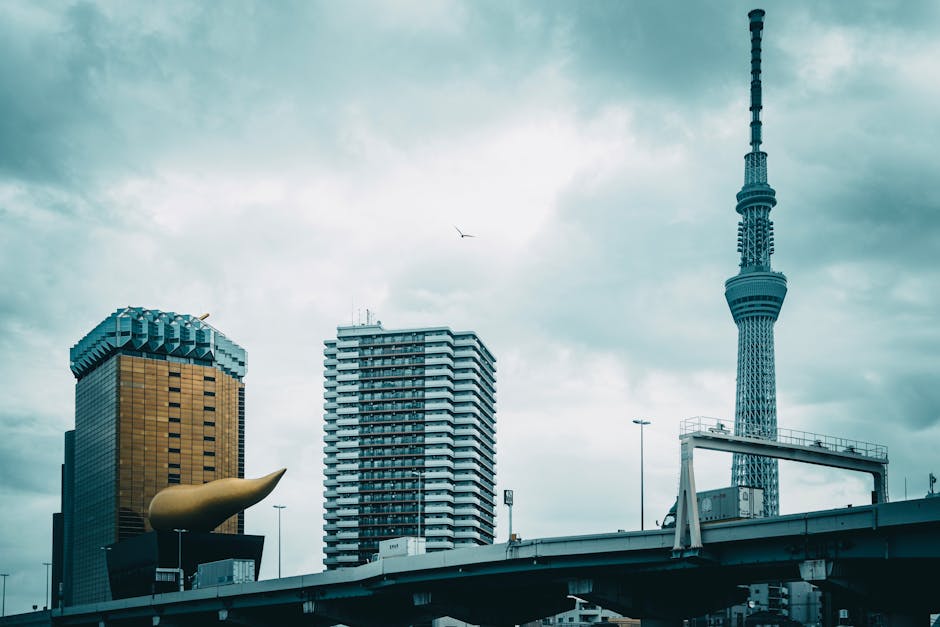
For urban planners and researchers, Skytree is a unique laboratory. Its height allows for studies of atmospheric conditions, urban heat island effects, and even the migratory patterns of birds over the metropolis. I spoke once with an environmental scientist who used time-lapse photography from the decks to track smog density and its flow through the city’s corridors. For the tourism and retail complex at its base, Tokyo Solamachi, the tower is the ultimate anchor tenant. It draws over 25 million visitors a year, creating a massive economic ecosystem of shops, restaurants, and the excellent Sumida Aquarium. It’s a textbook case of infrastructure-driven urban renewal.
Perhaps its most critical application is symbolic. In the aftermath of the 2011 Great East Japan Earthquake, which struck while Skytree was under construction, its completion took on a new meaning. It became a symbol of resilience and recovery. The planned illumination was changed to a more serene, traditional Iki (stylish) aesthetic of blue and white, seen as a calming influence. When it finally opened, it felt like a collective deep breath for the city—a look toward the future.
The Double-Edged Sword: Advantages and Inevitable Trade-offs
Skytree’s advantages are monumental, quite literally. Its technical prowess is unmatched in Japan. It solved the broadcast problem definitively, future-proofing the city’s airwaves. As an architectural icon, it’s a stunning success, instantly recognizable and deeply integrated into the cultural fabric. It’s a powerful economic engine for a part of Tokyo that needed it.
But living with a global landmark has its downsides. The most obvious is the crowds. I made the mistake of visiting on a national holiday once. The queue for the elevator snaked through what felt like miles of sterile, airport-style corridors. The experience became less about wonder and more about crowd management. Booking a timed ticket in advance is an absolute non-negotiable best practice I learned the hard way.
The second is the cost. A visit isn’t cheap, especially if you go to both decks and indulge in the souvenir shops. It can feel transactional. And while the Solamachi complex is fun, it can veer into generic “airport mall” territory, which sometimes clashes with the authentic, artisanal vibe of the surrounding Sumida ward. There’s also a valid criticism that such mega-projects can accelerate gentrification, pricing out long-time residents. The area’s character has undeniably changed since 2012.
A Personal Chronicle: Case Studies in Light and Shadow
My experiences with Skytree have taught me to seek its different moods. The standard daytime visit is for the geography lesson. But go just before sunset. You get the dying light over the city, then watch as, floor by floor, millions of lights blink on, and the tower’s own illumination begins. It’s a twice-in-one-visit magic trick.
One of my most memorable case studies was during a summer yukata festival. The streets below were filled with people in light cotton kimonos, carrying paper lanterns. From the Tembo Deck, the scene was a slow, flowing river of soft light, a living tapestry of tradition against the modern grid. Skytree provided the vantage point to see the scale of the tradition, connecting the intimate street-level experience with the grand, aerial view.
Conversely, I once spent a rainy, foggy afternoon up there. The city vanished. We were in a cloud, with only the faintest ghostly outlines of the nearest skyscrapers visible. It was eerie, quiet, and profoundly isolating—a completely different, almost metaphysical experience. It highlighted how the tower’s value isn’t just in the view, but in the space it creates, a bubble of quiet observation high above the frenzy.
Not the Only Giant: How Skytree Stacks Up
The natural comparison is with Tokyo Tower. It’s not a fair fight on paper—Skytree is over twice as tall. But they serve different purposes. Tokyo Tower is a beloved, accessible friend. It’s cheaper, less crowded, and sits in a park, feeling more integrated into the neighborhood. Its retro-futurist aesthetic has a warmth that Skytree’s cool perfection lacks. For a quick, charming view without the epic commitment, Tokyo Tower still wins.
Globally, it’s compared to the Canton Tower or the CN Tower. Having been to CN Tower in Toronto, I can say the experience is different. CN Tower feels more purely utilitarian—a bold exclamation mark on the skyline. Skytree feels woven into its context, its design narrative rooted in place. It doesn’t just dominate Tokyo; it converses with it.
Common Pitfalls and How to Sidestep Them
Based on my many visits and countless conversations with disappointed tourists, here’s my survival guide:
- The Queue Calamity: Never, ever just show up. Always buy a timed ticket online in advance. The “Skip the line” tickets are worth every yen. Aim for a weekday opening time or a late evening slot.
- The Weather Washout: Checking the live camera feed on Skytree’s website is crucial. A clear day is transformative. Going up on a hazy or overcast day is a expensive let-down.
- The Rushed Visit: People often budget an hour. You need at least two, preferably three, to go to both decks, enjoy the view without panic, and explore the free exhibits on the Tembo Deck about the tower’s construction.
- Missing the Base: Everyone looks up. Take time to look at it. Walk across the Sumida River from Asakusa for the classic postcard view. Visit the nearby Tobu Museum to understand the rail and development empire that built it.
- The Dining Miss: The restaurants on the Tembo Deck (like the excellent Sorakara at 345) require advance reservations, often weeks ahead. If you want to dine with a view, plan accordingly. Otherwise, the options are limited to cafes.
The Future Pillar: What’s Next for Tokyo’s Skyline Sentinel?
Skytree isn’t done evolving. Its role as a digital infrastructure hub will only grow. With the expansion of 5G and future broadcast standards, its antennae will be continuously updated. I see it becoming an even more integrated smart city node, potentially involved in traffic management, environmental sensing, and next-generation communication networks.
The surrounding area, Tokyo Skytree Town, is still developing. The focus will likely shift from sheer visitor numbers to enhancing the quality and diversity of the experience, perhaps integrating more with the historical and cultural assets of Sumida ward, like the Edo-Tokyo Museum and the traditional craft shops. The challenge will be balancing its global icon status with its role as a good local neighbor.
More personally, I believe its future is as a barometer of the city’s spirit. It changed its lights to mourn tragedies and celebrate victories. It will continue to be the canvas upon which Tokyo projects its collective mood. The planned illuminations for the 2020 Olympics were a glimpse of that potential, cut short by the pandemic.
Final Thoughts: A Pillar for the People
Tokyo Skytree, in the end, is a paradox. It’s a hyper-modern feat of engineering that draws its soul from a 1,400-year-old architectural idea. It’s a global tourist trap that performs a vital, unseen service for every Tokyo household. It can feel impersonal in its scale, yet it has become a personal landmark for millions.
For me, it’s a reminder that the most impressive structures are those that serve multiple masters: function, form, and feeling. It’s not just a tower I’ve visited; it’s a constant on my horizon, a needle stitching the sky to the city. My advice isn’t just to go see it. Go see it thoughtfully. Book the right ticket, pick the right time, look beyond the glass, and think about the invisible waves carrying your favorite TV show, the silent pendulum core waiting for the next tremor, and the centuries of design wisdom holding it all up. That’s when you stop being a spectator and start to understand the pillar at the heart of the metropolis.